


Choosing the right commercial waste bin size is an important part of managing your business waste efficiently. Whether you operate a small independent shop, a busy restaurant, an office or a large manufacturing facility, having suitable waste containers can help reduce unnecessary collection costs, improve recycling and keep your premises clean and organised.
However, with several commercial bin sizes available, knowing which option is best suited to your business can be challenging.
In this guide, KCM Waste Management explains the different commercial waste bin sizes available, what to consider when choosing your containers and how to find the right waste collection solution for your business.
What Commercial Waste Bin Sizes Are Available?
Commercial wheelie bins are available in several capacities, measured in litres. Smaller containers are generally suited to businesses producing lower volumes of waste, while larger four-wheeled bins accommodate higher waste volumes.
At KCM Waste Management, our commercial wheelie bin range includes:
| Bin size | Depth | Width | Height |
|---|---|---|---|
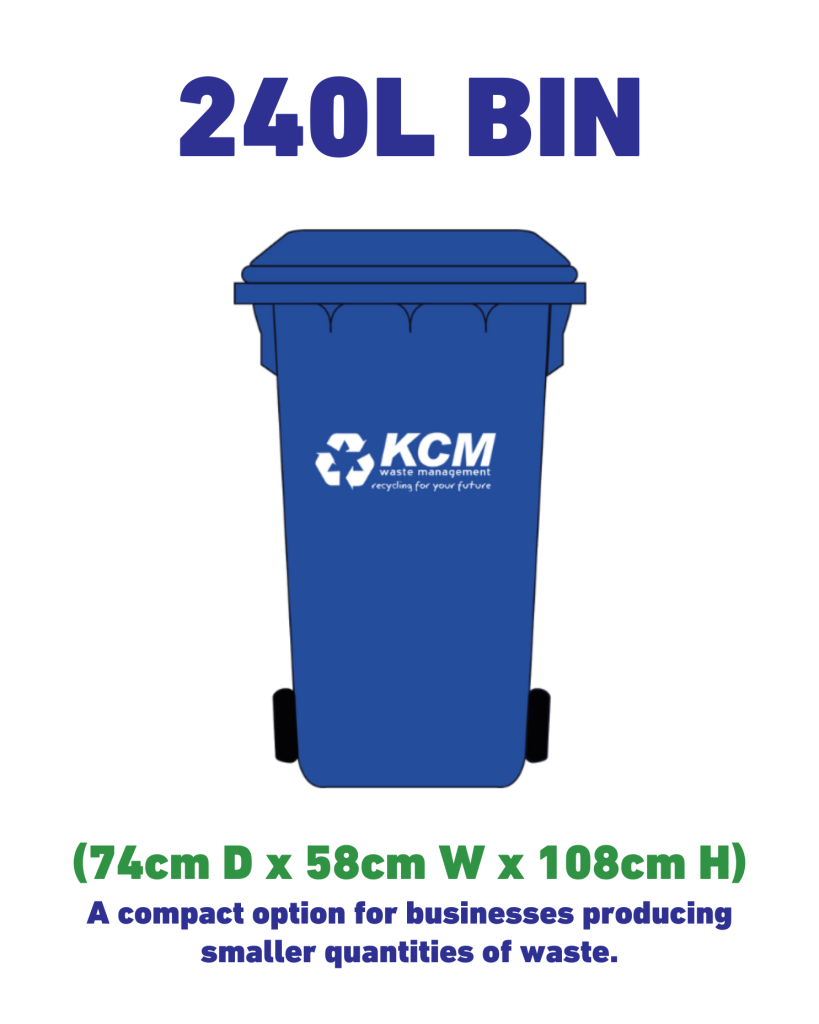
| 240 litre | 74cm | 58cm | 108cm |
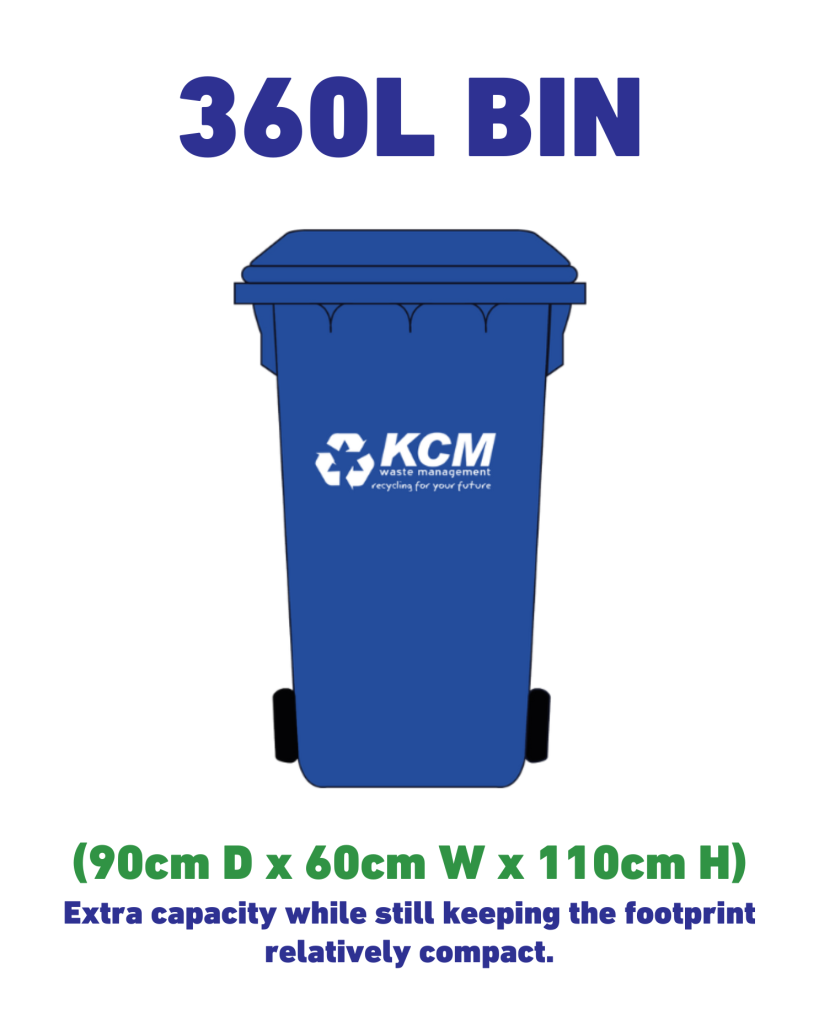
| 360 litre | 90cm | 60cm | 110cm |
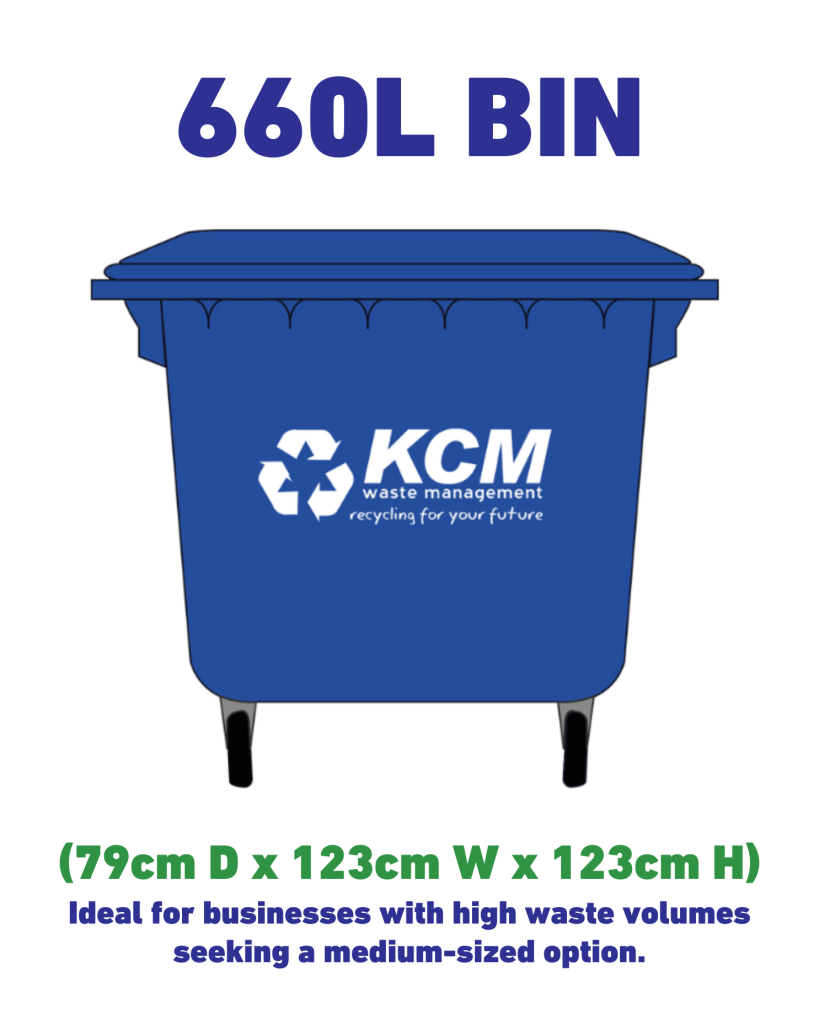
| 660 litre | 79cm | 123cm | 123cm |
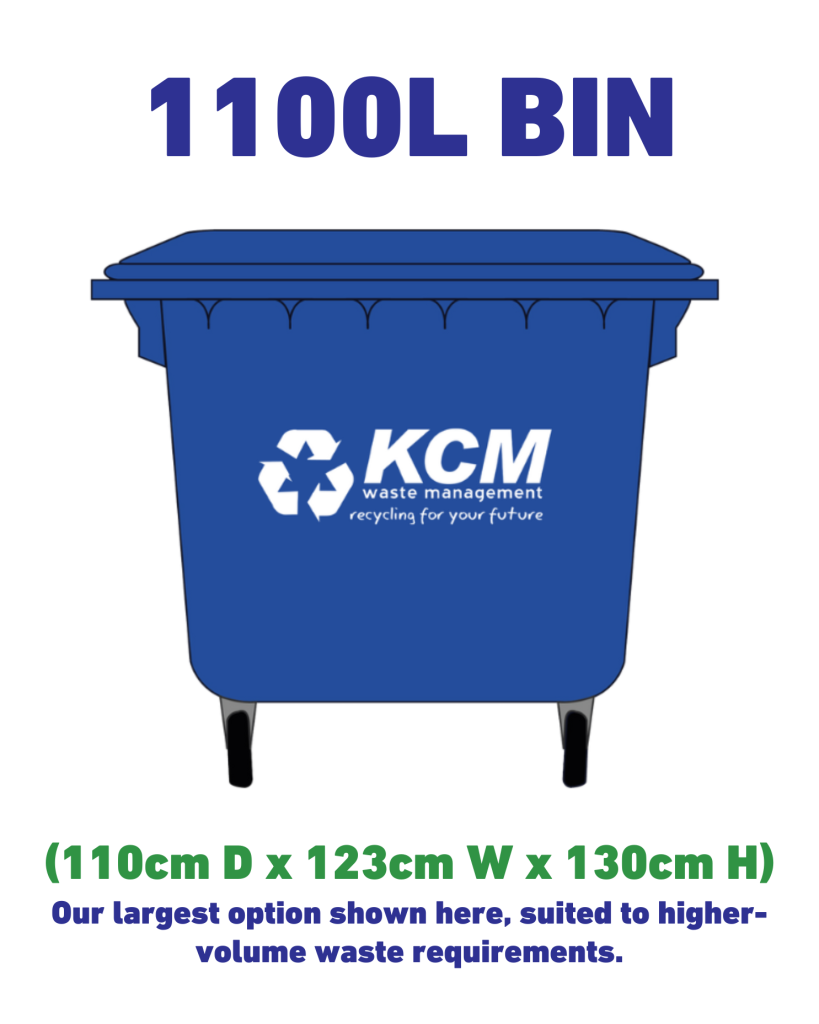
| 1100 litre | 110cm | 123cm | 130cm |
Dimensions are provided as a guide. Your chosen container must have sufficient storage space and suitable access for collection.
240 Litre Commercial Waste Bins
A 240 litre commercial bin is a compact, two-wheeled container, similar in size to a standard household wheelie bin.
Its smaller footprint makes it particularly useful for businesses with limited outdoor storage space or relatively low waste volumes.
Potentially suitable for:
- Small offices
- Independent retailers
- Hairdressers and beauty salons
- Small cafés
- Businesses producing low volumes of waste
A 240 litre container may also be used alongside larger bins to separate smaller waste streams.
360 Litre Commercial Waste Bins
A 360 litre bin provides 50% more capacity than a 240 litre container while retaining a relatively compact, two-wheeled design.
It can be a practical option for businesses that regularly fill a smaller bin but do not have the space or requirement for a larger four-wheeled container.
Potentially suitable for:
- Medium-sized offices
- Convenience stores
- Cafés and takeaway businesses
- Small workshops
- Businesses producing moderate volumes of packaging waste
660 Litre Commercial Waste Bins
A 660 litre commercial bin is a four-wheeled container designed to accommodate higher waste volumes.
It provides additional storage capacity and can be particularly useful for businesses generating regular quantities of general waste or recyclable materials.
Potentially suitable for:
- Restaurants
- Pubs and hospitality venues
- Schools
- Larger retail premises
- Warehouses
Businesses should ensure that their bin storage area and collection access can accommodate the wider container.
1100 Litre Commercial Waste Bins
An 1100 litre commercial waste bin is the largest standard wheelie bin within KCM’s commercial bin range.
Its high capacity makes it a popular option for businesses producing substantial amounts of everyday waste and recycling.
Potentially suitable for:
- Supermarkets
- Hotels
- Manufacturing facilities
- Distribution centres
- Large commercial premises
- Multi-occupancy business sites
Depending on waste volumes and collection frequency, larger businesses may require multiple containers for different waste streams.
What If My Business Produces More Waste Than a Wheelie Bin Can Hold?
For businesses generating particularly high waste volumes, a Front End Loader (FEL) may provide a more suitable solution.
At KCM Waste Management, we offer a range of Front End Loader (FEL) containers, including 6, 8 and 10 cubic yard options, to accommodate businesses with larger commercial waste requirements.
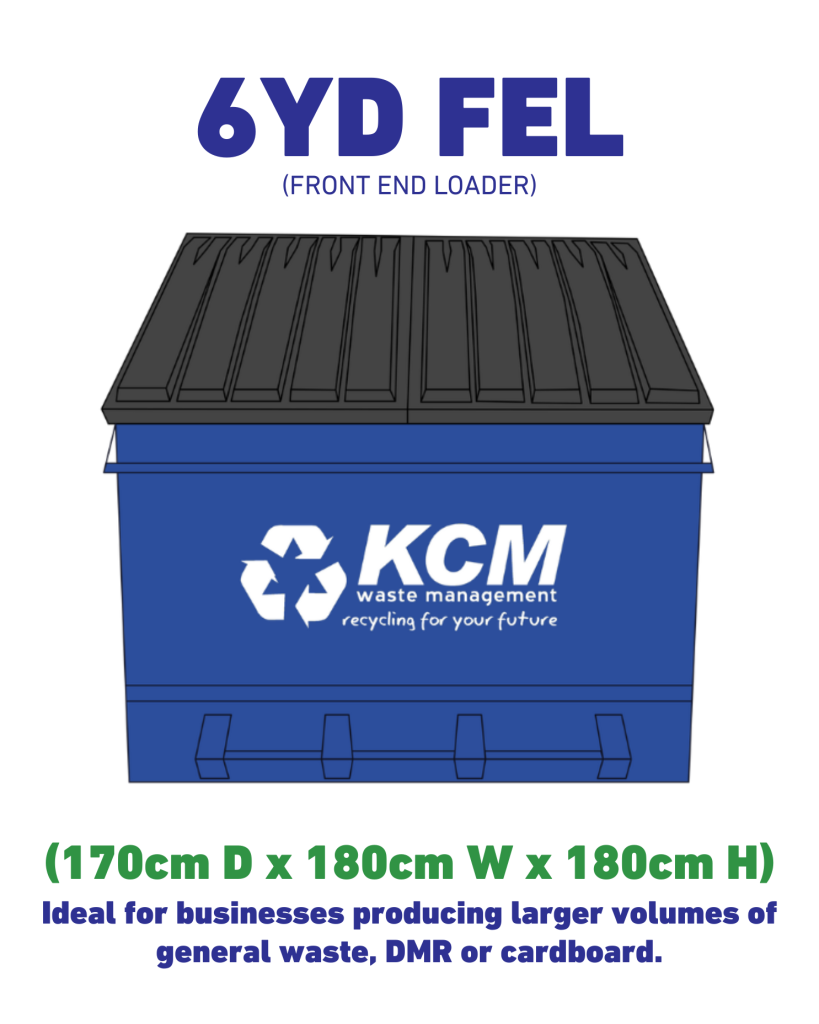
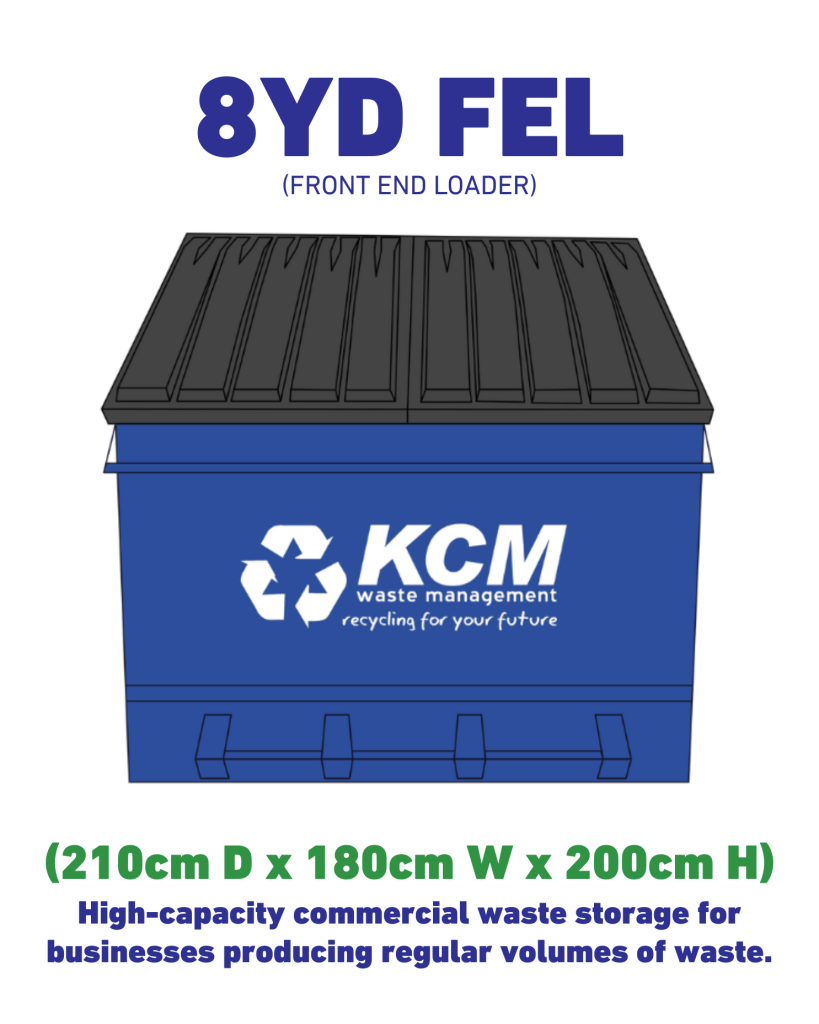
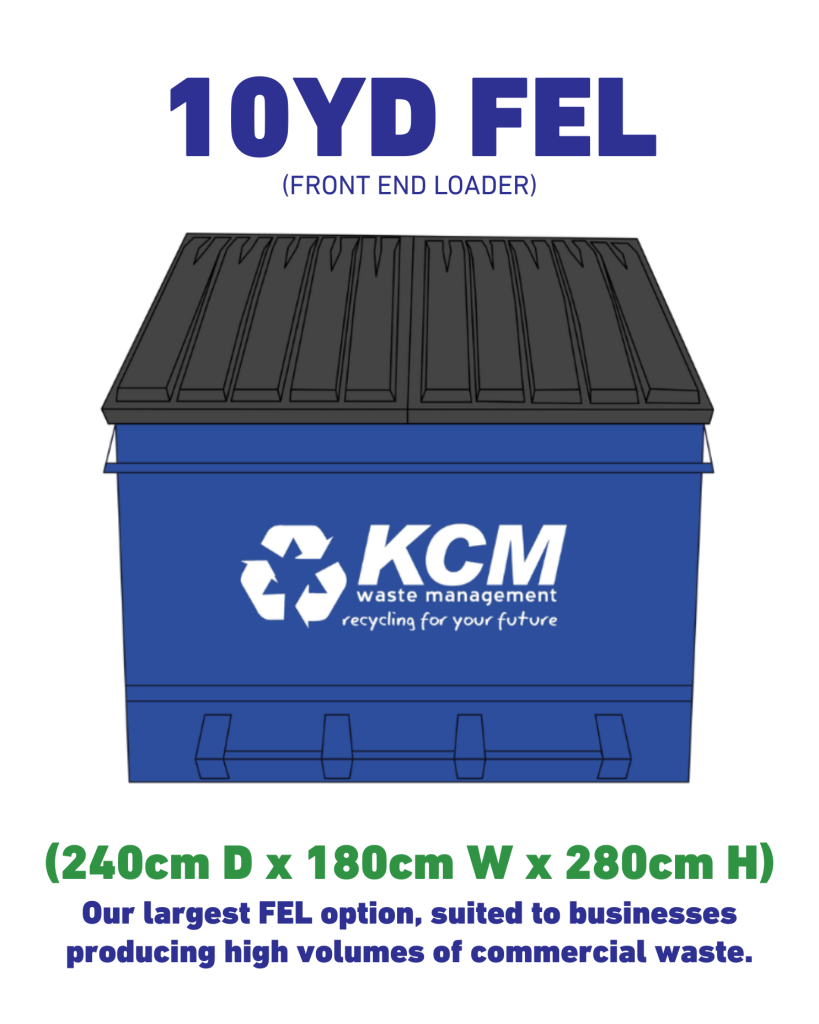
Unlike traditional wheelie bins, Front End Loaders are large, stationary waste containers emptied using specialist collection vehicles.
They can be particularly useful for manufacturing businesses, warehouses, distribution centres and other commercial premises producing substantial volumes of suitable waste.
The suitability of a Front End Loader will depend on the type of waste produced, available space and vehicle access.
How Do I Calculate What Commercial Bin Size My Business Needs?
The most effective way to establish your commercial bin requirements is to assess how much waste your business produces over a typical working week.
Start by considering:
- How much general waste your business generates.
- How much recyclable material you produce.
- Whether you generate food waste, glass or other separate waste streams.
- How much space is available for waste containers.
- How frequently your containers need to be emptied.
- Whether waste production changes during busy or seasonal periods.
For example, if your business generates approximately 600 litres of dry mixed recycling each week, a 660 litre bin collected weekly may be a suitable starting point.
However, if your business produces approximately 1,200 litres each week, you may benefit from more frequent collections or additional containers.
Waste weight, density and collection limits must also be considered, particularly when disposing of heavier materials.
What Types of Commercial Waste Bins Does My Business Need?
Choosing the right bin size is only one part of developing an effective waste management system. Businesses must also consider the different materials they produce.
Common commercial waste streams include:
- General waste: Non-recyclable everyday business waste.
- Dry mixed recycling: Suitable recyclable materials, depending on your collection agreement.
- Cardboard and paper: Packaging, boxes and suitable paper products.
- Food waste: Food preparation waste, leftovers and other suitable food materials.
- Glass waste: Suitable glass bottles and jars.
- Confidential waste: Sensitive documents requiring secure disposal.
Different waste streams may require different container types, sizes and collection arrangements.
Businesses should also consider workplace recycling regulations applicable to their location and organisation.
Does Commercial Bin Size Affect Waste Collection Costs?
Yes. The size of your commercial bins is one of several factors that can influence your waste collection costs.
Other factors include:
- Waste type
- Collection frequency
- Waste weight
- Number of containers
- Business location
- Site accessibility
Choosing a container that is too large may mean paying for capacity you do not regularly use. Alternatively, choosing a container that is too small can result in overflowing bins and additional collection requirements.
Regularly reviewing your waste arrangements can help ensure your service remains appropriate as your business grows or changes.
Where Should Commercial Waste Bins Be Stored?
Commercial waste containers should be stored in a suitable, secure and accessible area.
When planning your bin storage area, consider:
- Safe access for employees.
- Sufficient space to open container lids.
- Suitable access for collection vehicles.
- Keeping fire exits and pedestrian routes clear.
- Preventing unauthorised access where necessary.
- Keeping waste containers clearly identifiable.
Your waste management provider can help assess whether your proposed storage arrangements are suitable for collection.
Frequently Asked Questions
What is the largest commercial wheelie bin?
The largest standard commercial wheelie bin offered by KCM Waste Management is the 1100 litre container. Larger waste storage solutions, including Front End Loaders, are also available.
Can my business have different-sized commercial bins?
Yes. Businesses can use a combination of container sizes to manage different waste streams and volumes. For example, you may require a larger cardboard recycling bin alongside a smaller general waste container.
Can I change my commercial bin size?
If your waste requirements change, contact your waste management provider to discuss adjusting your containers or collection frequency.
How often should commercial waste bins be emptied?
Collection frequency depends on the volume and type of waste produced, available storage space and individual business requirements. Your collection schedule should prevent waste from accumulating or overflowing.
Is a bigger commercial bin always better?
No. The most suitable bin is one that matches your waste volumes, storage space and collection requirements. A larger container is not necessarily the most cost-effective solution.
Find the Right Commercial Waste Bin for Your Business
At KCM Waste Management, we understand that every business has different waste requirements.
With over 40 years of waste management experience, we help businesses identify suitable waste containers, recycling solutions and collection schedules tailored to their operations.
Whether you are arranging your first commercial waste collection or reviewing an existing service, our team is here to help.
Contact KCM Waste Management today to discuss your commercial waste requirements.
Call: 0800 772 0948
Email: bins@kcmwaste.com