


Bin Not Bed: Helping Protect People Sleeping Rough
A bin is not a bed. Help us make sure nobody is treated like waste.
Bin Not Bed is a KCM Waste Management campaign raising awareness of the potentially life threatening dangers faced by people sleeping rough who seek shelter in commercial waste containers and bins.
For somebody experiencing homelessness, a commercial bin can appear to provide temporary protection from the cold, rain and dangers of sleeping outside. But what looks like shelter can become an extremely dangerous place when that container is collected. People sleeping inside commercial bins can be difficult for waste collection crews to see. If their presence isn’t identified before a collection takes place, they could potentially be lifted into a waste collection vehicle along with the contents of the container.
Behind every bin could be a person. Behind every person is a life worth protecting.
Bin Not Bed aims to bring together the waste industry, businesses, charities and communities to increase awareness, encourage vigilance and help connect people sleeping rough with appropriate support.
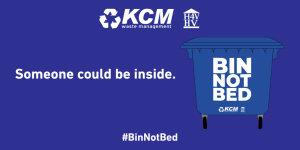
What Is Bin Not Bed?
Bin Not Bed is a safety and awareness campaign created by KCM Waste Management to highlight the risks associated with people sleeping in commercial bins and waste containers.
As a waste management company operating collection vehicles and servicing commercial waste containers, we recognise that our industry is uniquely positioned to raise awareness of this issue.
The campaign has three fundamental aims:
PREVENT: Help reduce the risk of people being injured during commercial waste collections.
PROTECT: Encourage businesses, waste collection crews and communities to remain vigilant around commercial waste containers.
SUPPORT: Help people sleeping rough become connected with organisations and services that can provide appropriate support.
Bin Not Bed isn’t about blaming people for seeking shelter.
It’s about understanding why somebody might find themselves there in the first place, and doing what we can to help keep them safe.
Why Would Someone Sleep in a Bin?
For most of us, the idea of sleeping inside a commercial waste container is difficult to imagine. But for someone experiencing homelessness or sleeping rough, circumstances can look very different. Large commercial bins can appear to provide:
- shelter from rain and severe weather;
- protection from wind and cold temperatures;
- somewhere hidden or enclosed to sleep;
- a temporary feeling of security;
- an alternative to sleeping completely exposed outside.
A person may enter a commercial bin late at night when businesses are closed and surrounding areas are quiet. By the following morning, staff and waste collection crews may have no idea somebody is inside.
That creates a serious hidden risk.
What may feel like shelter overnight could become dangerous when the working day begins.
Why Is Sleeping in a Commercial Bin Dangerous?
Commercial waste containers are designed to store waste; they are not safe environments for people to enter or sleep inside. Waste collections involve large vehicles, heavy containers and powerful mechanical equipment. Depending on the waste collection system being used, a commercial container may be mechanically lifted and emptied into a collection vehicle. Some waste collection vehicles also use compaction equipment to reduce the volume of waste being transported.
If a person is hidden amongst the contents of a container, they may not immediately be visible from outside. This is why awareness and vigilance are so important.
The dangers can include:
Being unseen
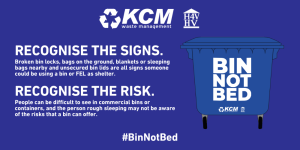
Commercial waste containers can be large, dark and filled with bags or other materials. Someone sleeping inside may be completely obscured from view.
Mechanical lifting
Many commercial bins are emptied using mechanical lifting equipment attached to waste collection vehicles.
Falling into a collection vehicle
If somebody remains inside a container during the collection process, there is a risk of them falling into the vehicle when the container is emptied.
Waste compaction
Certain waste collection vehicles use powerful compaction mechanisms. This makes identifying somebody before they enter the vehicle critically important.
Hazardous contents
Commercial waste can contain broken materials, sharp objects, contaminated waste and other hazards that could cause injury.
Extreme temperatures
Bins can become extremely cold during winter and dangerously hot during warmer weather.
The safest outcome is always preventing somebody from being inside a commercial waste container when collection takes place.
The Waste Industry Has an Important Role to Play
Waste collection crews work across communities every single day. That places the waste management industry in a unique position.
Drivers and loaders aren’t only collecting waste. They may also be among the first people arriving at commercial premises early in the morning, when somebody sleeping rough may still be sheltering nearby. Awareness can therefore make a real difference. Waste companies can help by promoting:
- driver awareness
- appropriate collection safety procedures
- vigilance around commercial waste containers
- reporting of concerns
- communication with customers
- awareness amongst businesses
- information about homelessness support services
Bin Not Bed aims to encourage conversations throughout the UK waste management industry about how we can collectively help reduce the risks faced by vulnerable people.
Businesses Can Help Too
This isn’t an issue the waste industry can tackle alone. Businesses using commercial waste containers also have an important part to play.
Employees working at a premises are often more familiar with their waste storage areas than anyone else. They may notice changes that a visiting collection driver cannot. For example, signs that somebody may have been sheltering around a bin area could include unusual movement around containers or evidence that an area has been used overnight. Businesses can support the Bin Not Bed message by:
- keeping waste storage areas appropriately managed
- encouraging employees to remain observant
- making staff aware that people may seek shelter in commercial waste containers
- reporting concerns appropriately
- providing employees with information about organisations such as StreetLink
- sharing Bin Not Bed awareness materials
- communicating relevant information to their waste provider
Awareness doesn’t require employees to put themselves at risk.
If you are concerned about somebody, use appropriate support or emergency services rather than placing yourself in an unsafe situation.
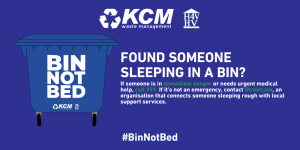
What Should I Do If I Find Someone Sleeping in a Bin?
If you discover or suspect that somebody is sleeping inside a commercial waste container, do not ignore it.
1. Stop and assess the situation
If a collection is due, make sure the relevant people are made aware that somebody may be in or around the container. Never knowingly allow a container occupied by a person to be collected.
2. Don’t put yourself in danger
Do not climb into a container or put yourself in an unsafe situation. If approaching the individual does not feel safe or appropriate, maintain a safe distance and contact the relevant service.
3. Consider whether it is an emergency
If the individual appears to be seriously injured, unconscious, unresponsive, in immediate danger or requires urgent medical assistance, call 999.
4. Help connect them with support
If the situation isn’t an emergency, services are available to help people sleeping rough access local support. In England and Wales, StreetLink allows members of the public to send an alert about somebody they believe is sleeping rough. The information provided can be passed to the appropriate local outreach service, which can attempt to locate the individual and offer support.
5. Inform relevant staff
If the person is located on business premises, make sure appropriate colleagues or site management are aware of the situation. Where relevant, the business’s waste provider may also need to be informed.
What Is StreetLink?
StreetLink is a service that enables members of the public to connect people sleeping rough with local support services in England and Wales. If you are concerned about someone sleeping rough, you can submit an alert with information about where and when you saw them. The information is then passed to the appropriate local outreach team so they can try to locate the individual and offer support. Providing accurate information about the person’s location can help outreach teams find them.
StreetLink is not an emergency service.
If somebody requires immediate medical assistance or you believe they are in immediate danger, call 999.
Click here to report someone rough sleeping.
Homelessness Is More Than Having Nowhere to Sleep
Bin Not Bed focuses specifically on the dangers associated with commercial waste containers, but it’s important to recognise the much wider issue behind the campaign. There are many different reasons why somebody may experience homelessness or sleep rough.
Every person’s circumstances are different.
What matters is remembering that the person you see sleeping outside is exactly that… a person.
A son.
A daughter.
A parent.
A friend.
A colleague.
Someone with a story.
Someone who deserves dignity, compassion and the opportunity to access support. Bin Not Bed is therefore about more than waste collection safety. It’s about encouraging people to see the person before they see the problem.
Why Has KCM Waste Management Launched Bin Not Bed?
At KCM Waste Management, our teams work with commercial bins and waste collection vehicles every day. We understand the machinery involved. We understand how commercial waste collections operate. And we understand why somebody hidden inside a waste container presents such a serious safety concern.
That gives us an opportunity to use our experience and our platform to raise awareness.
KCM Managing Director Keith Hickling explains:
“Sadly, people sleeping rough can sometimes seek shelter in commercial waste containers without understanding just how dangerous that can become when the container is collected. As a waste management company, we believe we have a responsibility to raise awareness. If Bin Not Bed helps prevent even one serious injury or fatality, then the campaign has achieved something worthwhile.”
KCM has always believed that responsible waste management extends beyond collecting and processing waste.
We have a responsibility to the communities we work within too.
Our Bin Not Bed Mission
We want Bin Not Bed to create lasting awareness rather than becoming a message people see once and forget. Our ambition is to encourage organisations throughout the UK to recognise the issue and help spread the message.
PREVENT
Increase awareness of the dangers associated with sleeping inside commercial waste containers and help prevent avoidable injuries.
PROTECT
Encourage waste companies, businesses, employees and communities to remain vigilant and help protect vulnerable people.
SUPPORT
Help connect people sleeping rough with organisations that can provide specialist assistance and support.
EDUCATE
Provide practical information to businesses, waste professionals and members of the public about the issue and what they can do.
COLLABORATE
Work alongside charities, businesses, local organisations and the wider waste sector to amplify the campaign’s reach.
Help Us Spread the Bin Not Bed Message
One waste company cannot solve homelessness. One campaign cannot solve homelessness. But together, we can make more people aware of a hidden danger.
We’re asking businesses, waste management companies, charities, local authorities, community organisations and members of the public to help us spread the Bin Not Bed message.
You can support the campaign by:
- sharing Bin Not Bed content on social media
- discussing commercial bin safety with employees
- displaying campaign awareness materials
- educating teams who work around commercial waste containers
- making people aware of StreetLink and homelessness support
- encouraging other businesses to get involved
- helping us ensure the message reaches as many people as possible
Every share puts the message in front of somebody new. Every conversation creates awareness.
And increased awareness could ultimately help protect a life.
Are You a Business?
If your organisation uses commercial waste containers, you can help.
Talk to your employees about commercial bin safety and rough sleeping. Make sure relevant members of staff understand that people experiencing homelessness may occasionally seek shelter in or around commercial waste containers. Encourage employees to report concerns appropriately and make information about services such as StreetLink available. We’re also encouraging businesses to share Bin Not Bed resources with their teams and networks.
Your business could help this message reach the person who needs to see it.
Are You in the Waste Industry?
We want Bin Not Bed to extend beyond KCM. Protecting people shouldn’t be competitive. We’re encouraging waste management companies, industry professionals and organisations across the UK to help raise awareness of the dangers associated with sleeping in commercial waste containers. Whether you operate one vehicle or an entire waste collection fleet, you can help amplify the message.
Bin Not Bed belongs to a bigger conversation about safety, awareness and protecting vulnerable people.
One Person Is One Too Many
The person sleeping in a commercial bin isn’t waste. They’re not an inconvenience. They’re someone who may be experiencing one of the most difficult periods of their life.
And they deserve to wake up safely.
That’s why we’re asking everyone who encounters a commercial waste container to remember three words:
BIN. NOT. BED.
See the person.
Recognise the risk.
Help connect them with support.
Together, we can help make commercial waste collections safer and ensure more people understand that a bin is never a safe place to sleep.