


General waste bins are an essential part of many commercial waste management arrangements. However, understanding what can go in a general waste bin is important for preventing contamination, reducing environmental impact and ensuring your business manages its waste responsibly.
Although general waste bins are designed for everyday non-recyclable waste, they are not suitable for every material your business produces.
In this guide, we explain what businesses can put in a general waste bin, which items require alternative disposal arrangements and how to improve workplace waste segregation.
What Is General Waste?
General waste, sometimes referred to as residual waste, is waste that cannot be recycled through the appropriate recycling services available to your business and does not require specialist disposal.
General waste is commonly generated by offices, retail premises, hospitality businesses, warehouses and other commercial environments.
However, a general waste bin should not be treated as a container for everything. Businesses should separate recyclable materials, food waste and specialist waste streams where required.
What Can Go in a General Waste Bin?
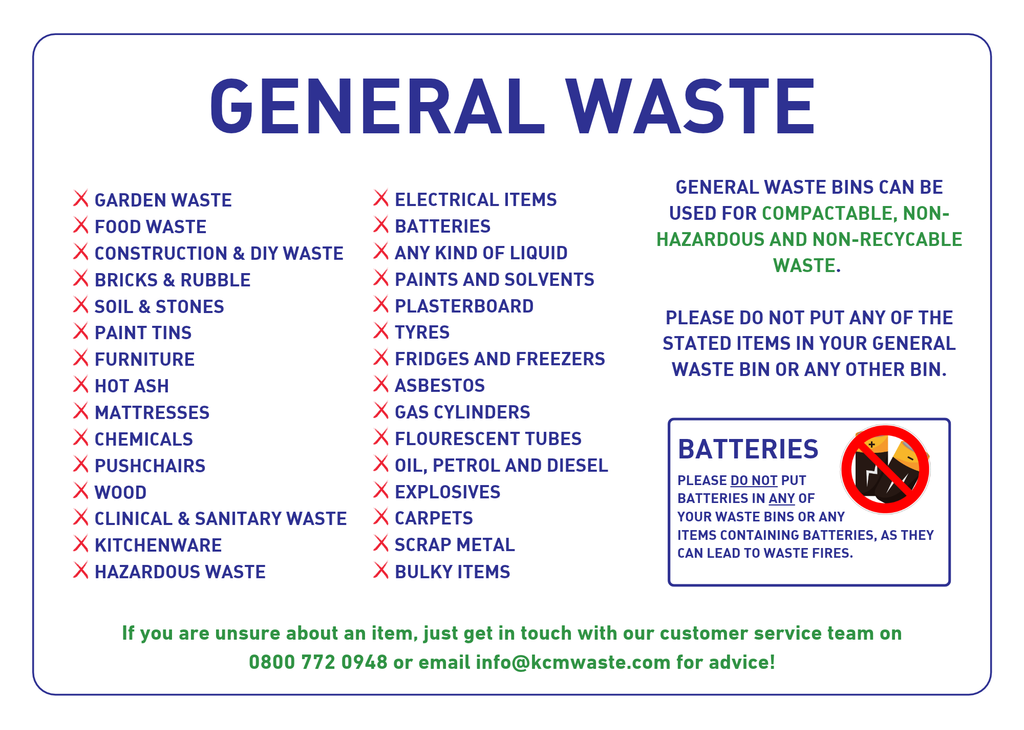
Commercial general waste bins are typically suitable for everyday non-hazardous, non-recyclable waste.
Common examples include:
- Non-recyclable packaging
- Used tissues
- Used paper towels
- Non-recyclable disposable cleaning cloths
- Contaminated packaging that cannot be recycled
- Non-recyclable stationery
- Suitable non-hazardous workplace waste
- Other everyday residual waste
Accepted materials may vary depending on your waste management provider and collection arrangements.
If you are unsure whether a particular item is suitable for your general waste bin, always check with your waste collection provider before disposing of it.
What Cannot Go in a General Waste Bin?
Certain materials should be kept out of commercial general waste bins because they can be recycled separately, require specialist treatment or present safety risks.
| Waste material | Alternative disposal method |
|---|---|
| Clean paper and cardboard | Appropriate recycling collection |
| Recyclable plastic packaging | Dry mixed recycling |
| Metal food and drinks cans | Dry mixed recycling |
| Glass bottles and jars | Glass recycling collection |
| Food waste | Dedicated food waste collection |
| Batteries | Specialist battery recycling |
| Electrical equipment | Appropriate WEEE disposal |
| Chemicals and solvents | Specialist waste disposal |
| Hazardous waste | Authorised hazardous waste collection |
| Gas cylinders | Supplier return or specialist disposal |
| Bricks, concrete and rubble | Suitable construction waste service |
| Tyres | Dedicated tyre disposal or recycling |
Always confirm the correct disposal route for specialist materials with your waste management provider.
Why Should Batteries Never Go in a General Waste Bin?
Incorrectly disposed of batteries, particularly lithium-ion batteries, present a significant fire risk within the waste management industry.
Batteries can become damaged during waste collection, transportation and processing. This damage can cause overheating and potentially lead to fires.
Common workplace items containing lithium-ion batteries include:
- Disposable and rechargeable vapes
- Mobile phones
- Laptops and tablets
- Power tools
- Portable chargers
- Wireless headphones
- Rechargeable electronic devices
These items should never be placed into standard general waste or dry mixed recycling bins.
At KCM Waste Management, we actively encourage businesses and households to understand the dangers of incorrect battery disposal and use appropriate battery recycling facilities.
Read our lithium battery safety guide to learn more about responsible battery disposal and the risks associated with placing batteries in standard waste containers.
Can Food Waste Go in a Commercial General Waste Bin?
Food waste should be separated from general waste where businesses are subject to separate food waste collection requirements.
Under England’s Simpler Recycling reforms, most workplaces have been required to separate food waste and specified recyclable materials from residual waste since 31 March 2025.
Micro-firms with fewer than 10 full-time equivalent employees have until 31 March 2027 to comply with these workplace recycling requirements.
Businesses producing food waste should consider suitable dedicated food waste containers and collection arrangements.
Separating food waste can also help reduce unpleasant odours, improve workplace hygiene and prevent contamination of other waste streams.
Can Cardboard and Plastic Go in a General Waste Bin?
Clean, recyclable cardboard and accepted plastic packaging should be separated into appropriate recycling containers rather than placed into general waste.
Businesses such as retailers, warehouses and distribution centres may produce particularly large quantities of recyclable packaging.
Separating these materials can help reduce the volume of general waste produced and improve overall recycling performance.
Businesses should check which materials are accepted within their dry mixed recycling or dedicated cardboard collection services.
What Happens If You Put the Wrong Items in a General Waste Bin?
Incorrect waste disposal can create several problems throughout the waste collection and processing journey.
Potential consequences include:
- Rejected or delayed waste collections
- Additional waste management charges, depending on contractual arrangements
- Increased fire risks
- Damage to waste collection vehicles or processing equipment
- Risks to waste management employees
- Reduced opportunities for material recovery
- Environmental harm
- Potential non-compliance with waste regulations
Correct waste segregation starts at the point where waste is produced.
Providing employees with clear guidance and suitable disposal facilities can help reduce the likelihood of incorrect materials entering general waste containers.
How Can Businesses Reduce Their General Waste?
Reducing general waste does not necessarily require significant changes to your business operations.
Small improvements to everyday waste management practices can make a difference.
Introduce Separate Recycling Bins
Provide suitable containers for the different recyclable materials your business produces.
Use Clear Waste Segregation Signage
Clearly label waste containers so employees understand which materials belong in each bin.
Educate Employees
Provide staff with information about correct waste disposal, including the dangers of incorrectly disposing of batteries and electrical equipment.
Review Your Purchasing Practices
Consider whether your business can reduce unnecessary packaging, disposable products and other avoidable waste.
Conduct a Waste Audit
Review the materials entering your general waste bins to identify opportunities for recycling and waste reduction.
Review Your Collection Arrangements
Ensure your commercial waste bin sizes and collection frequencies reflect the actual requirements of your business.
Reducing the amount of recyclable material entering general waste containers may also help identify opportunities to manage waste collection costs more effectively.
What Size General Waste Bin Does My Business Need?
The most suitable general waste bin size will depend on the volume of residual waste your business produces, available storage space and collection requirements.
Commercial waste container options include:
- 240 litre wheelie bins
- 360 litre wheelie bins
- 660 litre commercial bins
- 1100 litre commercial bins
- Larger Front End Loader (FEL) containers
Businesses producing higher volumes of suitable general waste may benefit from larger containers or more frequent collections.
Read our guide to commercial waste bin sizes to explore the available container options and identify a suitable solution for your business.
Frequently Asked Questions
Can I put black bin bags in a commercial general waste bin?
Black bin bags containing suitable general waste can typically be placed into commercial general waste containers. However, prohibited materials should never be hidden inside bin bags.
Can I put vapes in a general waste bin?
No. Vapes contain electrical components and batteries that require appropriate specialist recycling arrangements. Incorrect disposal can present a serious fire risk.
Can I put broken glass in a general waste bin?
Broken glass can present a safety risk. Contact your waste management provider for guidance on suitable packaging, handling and disposal arrangements.
Can I put polystyrene in a general waste bin?
Some non-hazardous polystyrene may be accepted within general waste collections. However, specialist recycling options may also be available. Check with your waste management provider before disposal.
Can I put confidential documents in a general waste bin?
Confidential documents containing sensitive personal or business information should be disposed of securely through appropriate confidential waste destruction arrangements.
Can I put electrical items in a general waste bin?
No. Electrical and electronic equipment should be managed through appropriate WEEE disposal or recycling arrangements.
What should I do if I am unsure whether something can go in my general waste bin?
Contact your waste management provider before disposing of the item. Checking first can help prevent contamination, safety risks and incorrect waste disposal.
Commercial General Waste Collections with KCM Waste Management
At KCM Waste Management, we understand the importance of responsible and reliable commercial waste management.
With over 40 years of waste management experience, we help businesses identify suitable waste containers, recycling services and collection schedules tailored to their operations.
Whether you require regular general waste collections, additional recycling containers or advice on improving your existing waste management arrangements, our team is here to help.
Contact KCM Waste Management today to discuss your commercial waste requirements.
Call: 0800 772 0948
Email: bins@kcmwaste.com